

pigeon days
postscripts #13: on the indignity of cold weather, revenge, and going all the way around

I do not live happily or comfortably
With the cleverness of our times.
The talk is all about computers,
The news is all about bombs and blood.
This morning, in the fresh field,
I came upon a hidden nest.
It held four warm, speckled eggs.
I touched them.
Then went away softly,
Having felt something more wonderful
Than all the electricity of New York City.
- With Thanks to the Field Sparrow, Whose Voice is So Delicate and Humble, Mary Oliver
ruminations
I was fooled by the fleeting sunshine and clinging drops of sweat down my forehead, as I speed-walked to my seminar recently, that spring was finally here. Alas, I was wrong. As quickly as I opened my drawer of short sleeves and blouses, I was throwing back on my trench coat, my Uniqlo heattech, and squinting into the cold, grey expanse of the sky.
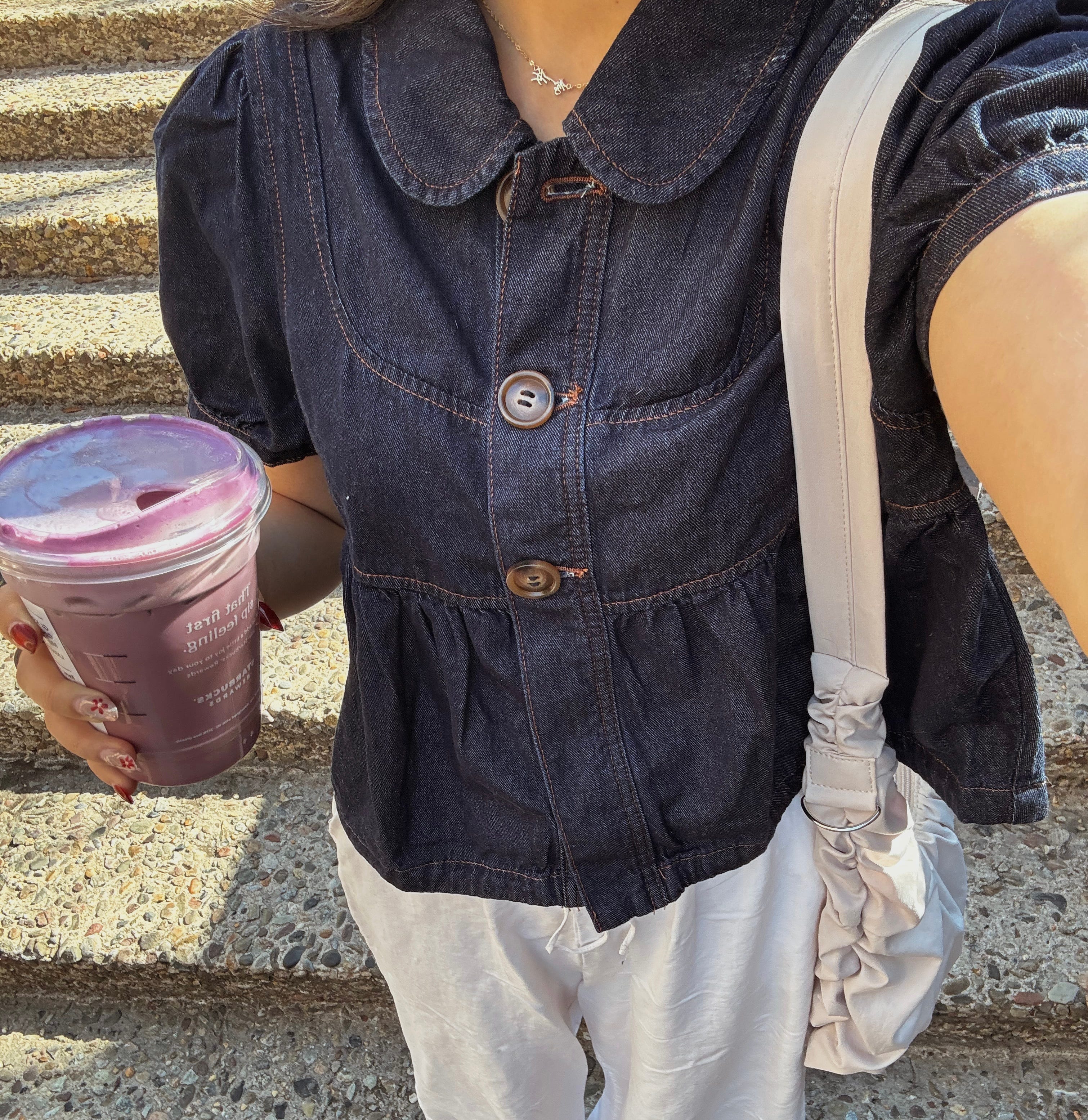
Just as well — I like my fashion in the winter much better, anyway. Although I can feel my body still yearn for warmth, or perhaps just for the California coast. I took the train up to New York City last weekend to catch up with an old friend, and we decided to be utter fools and walk the High Line at 8pm, when the walkway made for a perfect wind tunnel as it sat nestled between the high rises. Just when I felt like my face ceased to exist and my skin was going to peel from my knuckles, my sister Facetimed (home in SoCal, and three hours behind where the sun was still up). She was laying on a blanket in the backyard, our dogs splayed out beside her — I’m willing to bet the three of them soaked up more Vitamin D in those few minutes than I’d gotten since October. Smug, lucky b*tches (just kidding — if my sister is reading this, I MISS YOU AND LOVE YOU).
On my walk to and from campus these days, I find myself looking for the smallest signs of life fighting to break through the frost: splashes of color against the dead, tiniest nodes on branches which may soon turn into buds, the scampering of squirrels up and down the trunks. I fell in love with autumn here on the East Coast, and in hindsight enjoyed winter much more than I expected; the layers of snow which clung to the ground for much longer than anyone anticipated this year, while a hassle to get through at times, yanked at the cells in my heart which still remembered Canada.
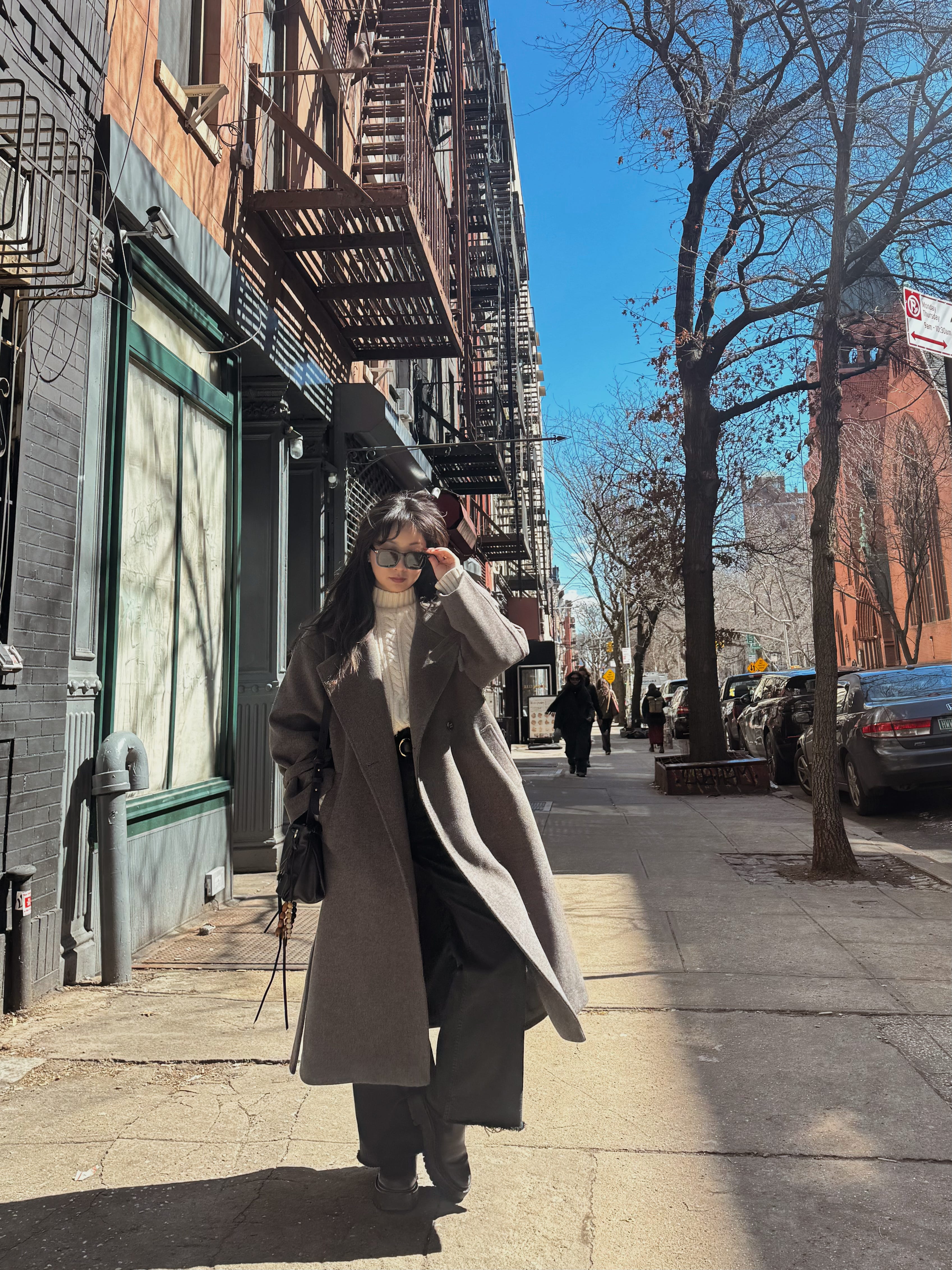
I also learned much more about myself (and my body) as I endured my first real experience through the seasons as an adult. This winter was a little rougher: while the cold was my blood pressure’s best friend, the more extreme temperatures triggered my Raynaud’s and I found my cotton gloves were wholly incapable of keeping my hands from turning into a jigsaw puzzle of white, blue, and purple. Some days, my knuckles would turn an angry red, often split, burn and sting painfully, and remain like an angry blister-rash of sorts for days — this I found out is called chillblains. Now I carry THICK gloves with me everywhere, because why would I let one annoying thing stop me from feeling the crisp winter air on my face? I still make an effort to come to class put together — as sick as I may feel when I’m at home, dressing well gives me a sense of control in more public settings. I know already that when I move back home in a few months, I will sorely miss the opportunity to dress up in long coats and find creative ways to make a puffer look good.
I feel a strange compassion for the small creatures who seem to thrive in these harsh conditions (“harsh,” by my SoCal-raised standards where mere drizzling can stop traffic, a downpour halts operations almost anywhere, and temperatures below 55F warrant parkas). I like to watch squirrels dance and chase each other up and down trees — my indication that the weather is warm enough for me to need to get things done, because if a squirrel can get out and move then there’s no reason you can’t. I also enjoy watching the crows spy on passersby in the quad, occasionally diving onto the sidewalks to snatch a spare cracker or bagel wrapper. But the pigeons hit me the hardest — I’ve found myself on occasion actually brought to tears as I’ve watched them hobble across the street on the pedestrian crosswalk, as if they’ve fashioned themselves to the traffic laws and regulations we have. On my best days, I feel like the squirrels, ready to chase my way up and down my chores, to-do list, and meet up with friends. Other days, I feel like a crow, watching the world from my bed and waiting for my sustenance to be dropped right below me (in the form of Doordash). And on some days — perhaps more frequently now as I near the latter half of my semester and feel myself beginning to be stretched thin across my many commitments — I feel pathetically and affectionately like a pigeon, stumbling across the city without a thought as to where I come from and to where I’d like to go.
p.s., you asked
In the interest of finding a way to keep my Substack sustainable and brain cells intact as I begin to crack under the weight of a million books and research papers, I asked everyone on Instagram recently to send in various words, scenarios, questions, dilemmas, etc. for me to respond to, and for me to use as inspiration points. I received a surprising amount of very generative submissions! I can only respond to a few, and I make no promises that I will interpret these submissions the way the sender might have hoped — they are after all nothing but the seed from which I’ll dump thoughts — but they will be earnest all the same.
Q: Is there an overarching principle of when it’s ok to take revenge/get even?
If we were all as perfectly moral and righteous and gracious as we’d like to or pretend to be, I’d say that revenge isn’t worth it, getting even wastes your energy and time and emotional labor, that the person who hurt you isn’t worth your cerebral square footage. But we’re all human, aren’t we? Even the nicest and most patient of us can be petty, spiteful, angry, in mourning, and I also think that’s beautiful. I’ve been alive for long enough, and like to think I’ve gone through enough (Trauma and trauma), to know now that it is objectively impossible for all the biology behind those more negative impulses — the anger, bitterness, rage — to just disappear. You can’t just make the adrenaline go away; it must course through your body. If not now, then probably in the millions of times the event or person will pop up in your head later down the road over the next many years of your life — so that every time you recount the event, you’ll find yourself shaking and wondering why you’re wracked with tremors when you thought you were over it.
But I also think that my perspective on revenge has become complicated. When I was little I thought it was always better to opt for no revenge, to tell myself the situation was not worth my energy like the adults in my life told me, and to have faith the wound would eventually heal. I do still agree that closure needs to come from yourself and that your healing is not contingent on whether you have the last word with someone else; but I also am now of the belief that “forgive and forget” is bullshit. Maybe in a couple of decades I’ll feel differently; but as of where I’m at now, I fully believe that you don’t need to forgive, nor forget, in order to move on. You do not need to forgive a person in order to find peace, and you should not forget because you might learn something wretched or something beautiful. And you can still move on in a way that does not revolve around or center the originating hurt/desire for revenge. The very act of doing so gets you even.
It doesn’t mean forcing yourself to push XYZ out of your mind when it comes up — because if it hurt you enough to want revenge, then you should expect it to stay with you for some time — but to simply acknowledge its presence in your brain, let it flow through your neurons like a piece of trash rides down a river, and then watch it wash out into the ocean and away from your immediate conscience. It will probably find its way back, but that’s no matter — you’ll simply watch it out into the ocean again. I’ve found acceptance, rather than forcing rejection, to be much more healing. And as the days and weeks and months and years pass, and you allow your fully-lived life to “be your revenge,” one day you’ll wake up and realize this hurt isn’t the first thing you think of anymore. Eventually, the hurt will no longer consume you, and then one day, you’ll wake up realizing you don’t want revenge anymore, and that’s when you know that your revenge has been had.
Q: Is gen alpha actually dumber?
I think this question is speaking more to character, and our perception of character and social morals/ethics, rather than strictly intelligence. Regardless of whether the average IQ in Gen Alpha has gotten higher or lower, there’s been much debate about the damage that short form videos and social media (probably catastrophically worsened by the pandemic forcing much of this generation to be isolated in a crucial period of time for developing social skills) has done for attention span. Biologically/neurologically, I don’t doubt for a minute this is sadly true. Our working memory and processing abilities are probably actively all going to shit. And I DO believe that TikTok and short form videos, and the general death of delayed gratification as a whole in our world which is slowly creeping toward a post-capitalist hellscape, is one of the worst things that has happened to humanity. It pains me to see children and teenagers today navigating an internet that is somehow unimaginably even more dangerous than when we as Gen Z first started using it and that still has shockingly little guardrails and protective measures; nobody knows how to be uncomfortable on the internet anymore; every single opinion needs to be turned into an intellectual think piece or be twisted into some kind of badge of moral performance (this does not even begin to account for the actual crimes happening/have happened…).
But these worst parts of the internet I’ve listed aren’t even limited to Gen Alpha, notice. We’re so quick to shit on them — sometimes, probably deservedly so — but the constant need to play victim, inability to sit with differing opinions in good faith, constant pressure or critique to perform to some ideology, never-ending desire to function and think only from one’s own frame of reference and a rigidity against considering others, is not limited to Gen Alpha, it’s really everyone on the f*cking internet. So while I can’t say whether or not Gen Alpha actually is dumber, I am noticing that some of the worst parts we are quick to pin on the younger generation, are not entirely nonexistent in ourselves (this, too, goes for the older generations that have been quick to judge us). If anything, I think it is more about the terrible conditions we have all been born into and from which we’ve been asked to somehow claw our way out of.
Q: revolution
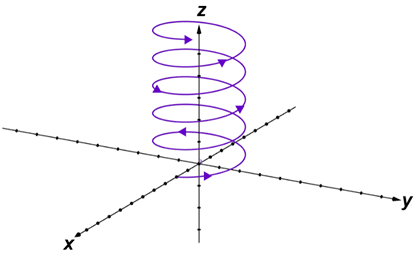
In math, a revolution is a full rotation — 360 degrees, or 2π radians. You travel the entire circumference and end up exactly where you began.
I was born 李一安, which means peace. I think that’s all my family ever wanted for me, and the older I get, the more I achieve and the more I pay the price for it, the more I realize that is also exactly what I desperately, desperately want. The road ahead never stops. I would like peace in my bones and my skin, where my body isn’t waging a war. Peace with my people. Peace in my mind, where I am content with everything that has been and is, where I am both wanting and not wanting.
My definition of peace has changed. I used to think it meant the absence of hardship weighing on my mind. But there’s a temporal factor — because someone who has never suffered at all is arguably innocent, rather than genuinely at peace. The peace comes because you know what it is to not have it. Peace comes when you have ridden the ups and downs of the wave, crawled through and fallen under it, maybe even almost drowned under the pressure of it, and have finally learned how to sit on top, bobbing up and down. It’s not to ignore or attempt to still the ocean, but to be content with the ocean as she is, and to learn to dance with the swells of gravity between you and the moon.
Because a revolution, despite being a full circle and returning to where you began, is also constitutive of the path you have traveled. To have simply been right where you started, with nothing gained or lost, is not a revolution at all but 0 degrees. A revolution requires acknowledging the circle, and what fun would it be to imagine that you might not just be back at the origin but spiraling upward into something new.
If you enjoyed these thought exercises and want to send in your own, keep an eye out for when I ask for more submissions next time! (@yiannlii on IG)
Yours in writing <3
Cherie